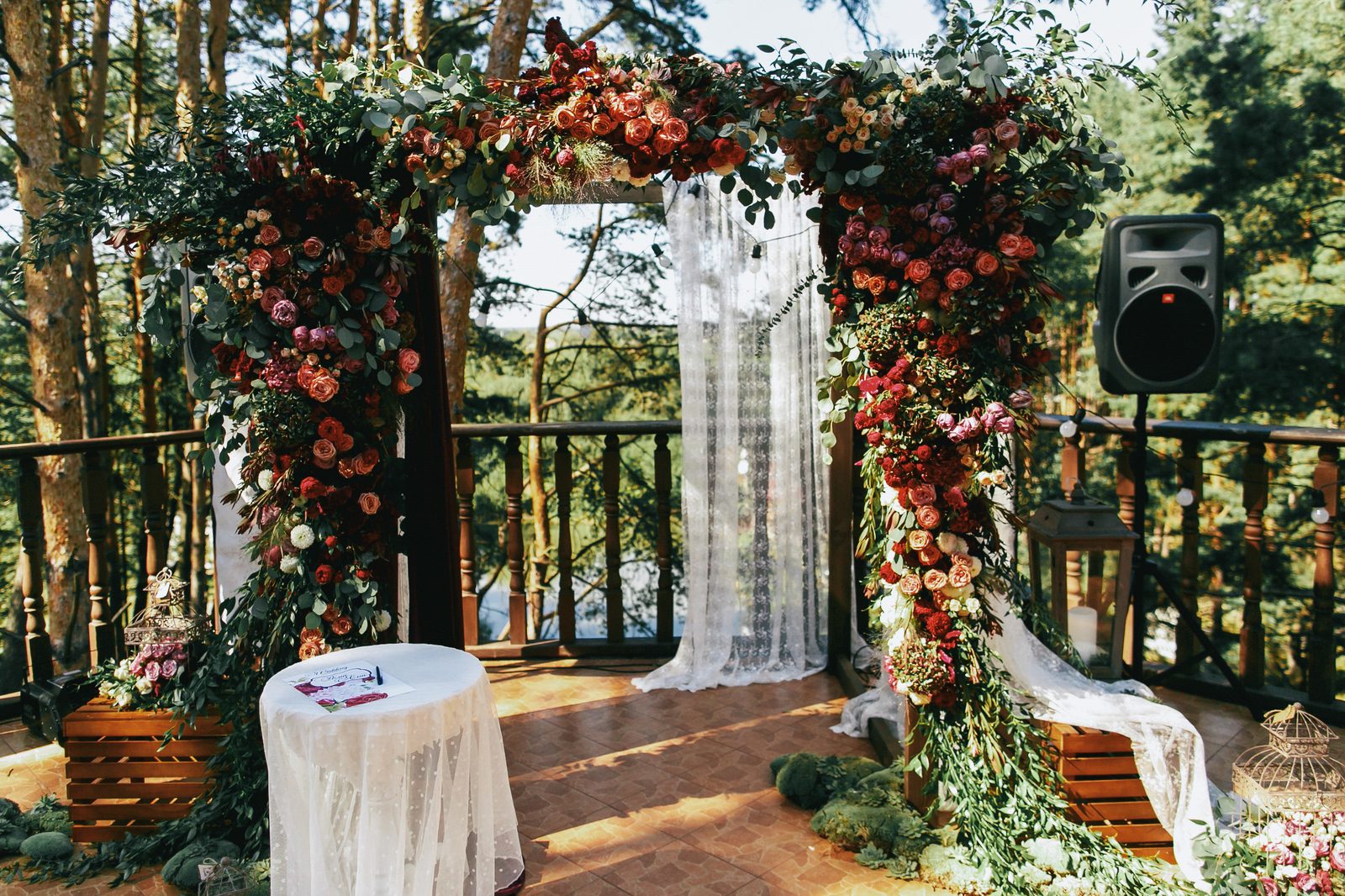
The mandap is not a stage. It is a sacred structure, a microcosm of the universe in four pillars.
The four pillars
Each pillar traditionally represents one of the four purusharthas — the goals of human life. When we design a mandap, we treat each pillar not as a decorative moment but as a point of reverence. The flowers at their base are chosen carefully; the pillars themselves are usually dressed with fabric that carries meaning for the family.
The torana
Above the ceremony space, the torana — the canopy — is where we most often take creative liberty. This is the element most visible in photographs, most flexible in form, and least rigid in tradition. A cascade of marigold, a wooden lattice, a woven canopy of jasmine and tuberose — this is where a family's aesthetic can speak loudest.
The fire, and its placement
The agnikund sits at the centre. This position is inviolable — but the approach to it, the seating arrangement around it, the distance from which guests witness the saat pheras — these are design decisions every bit as considered as the floral palette.
For a traditional ceremony consultation, contact the office.